NERVOUS SYSTEM
Thinking with the arms
OIST researchers say octopuses have over 500 million neurons, similar to a dog, with over two thirds of them in the arms and body rather than the brain.
See the numbers doodlesmarts
WHAT THE EVIDENCE SAYS
The octopus is a very different kind of clever.
Compare the evidence
500Mneurons
It has about as many neurons as a dog, but most of them sit in its arms. Researchers have watched octopuses learn mazes and carry coconut shells as portable shelters, and UK law now counts them as sentient.
Updated
THE SHORT ANSWER
Octopus intelligence evolved apart from ours.
The evidence comes from labs, dives and a UK review.
NERVOUS SYSTEM
OIST researchers say octopuses have over 500 million neurons, similar to a dog, with over two thirds of them in the arms and body rather than the brain.
See the numbersTOOLS
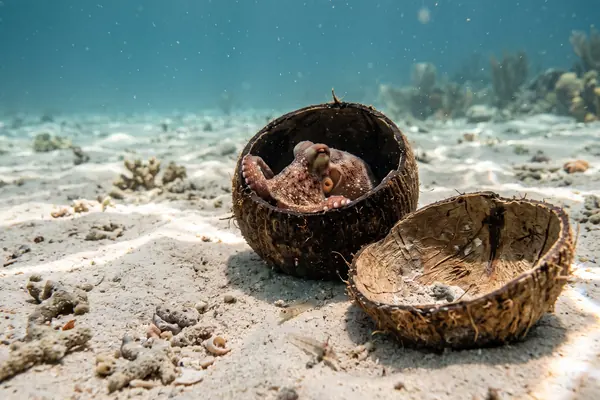
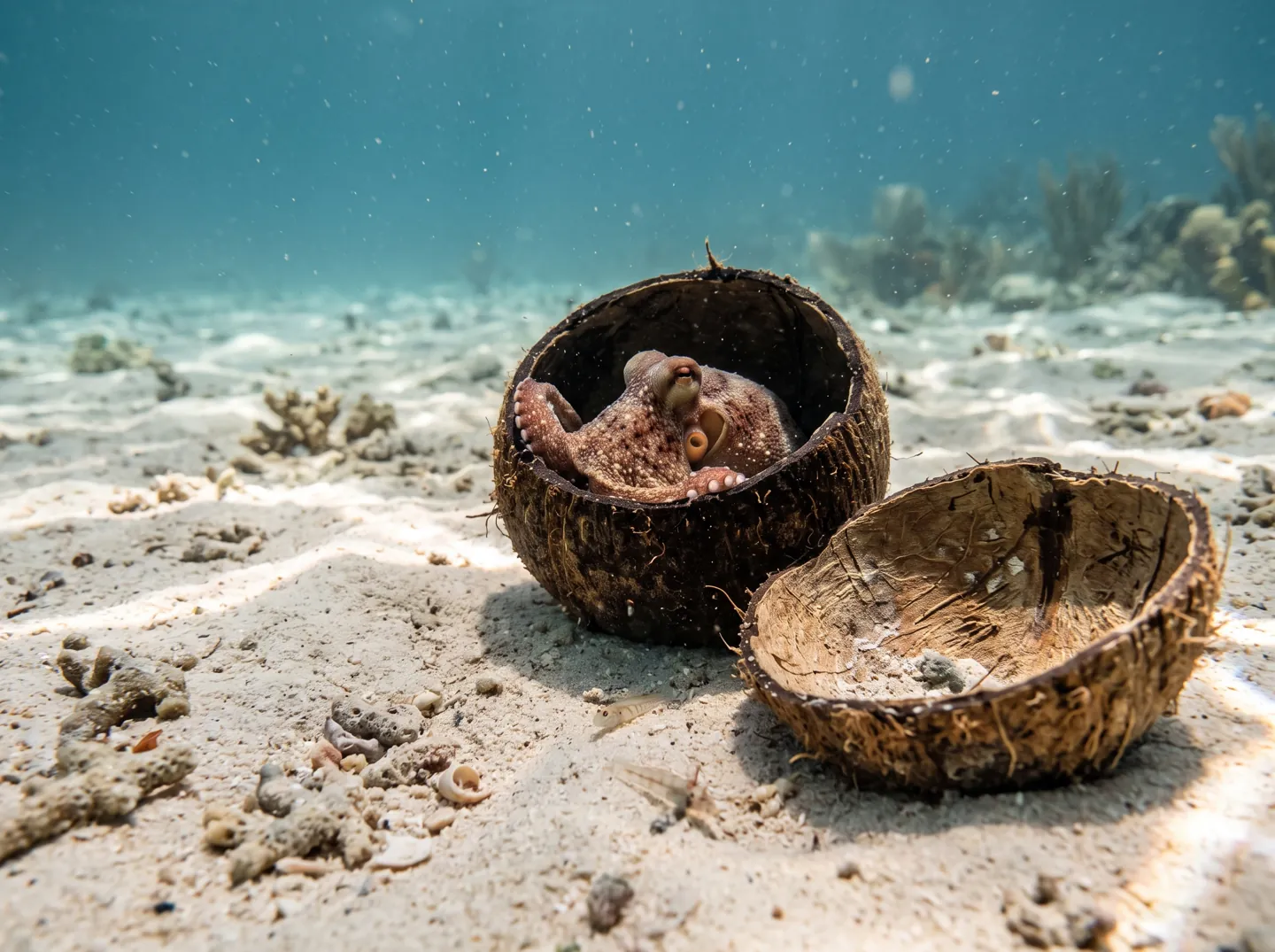
Divers in a 2009 study saw veined octopuses stack coconut shell halves and carry them up to 20 metres to use later as a shelter.
What they can doTHE LAW
The Animal Welfare (Sentience) Act 2022 counts every cephalopod mollusc, including octopuses, squid and cuttlefish, as a sentient animal.
Compare the evidenceCOMPARE THE EVIDENCE
Pick an animal group to see how the 2021 LSE review graded the evidence that it is sentient: able to experience pain, distress or harm.
Grades from the LSE Review of the Evidence of Sentience in Cephalopod Molluscs and Decapod Crustaceans (November 2021).
TWO NUMBERS WORTH KNOWING
One figure on the octopus itself,
one on how much research the UK review weighed.
500 million+
Neurons in an octopus
Similar in number to a dog's. Unlike in dogs and other vertebrates, over two thirds of an octopus's neurons sit in its arms and body, not its brain.
NEURONS · OIST
300+ studies
Scientific publications assessed
The government-commissioned LSE review judged over 300 publications against eight criteria, from pain-sensing nerves to learning.
UK REVIEW · LSE 2021
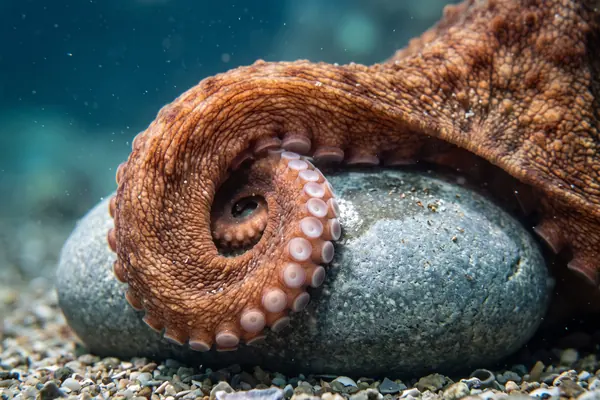
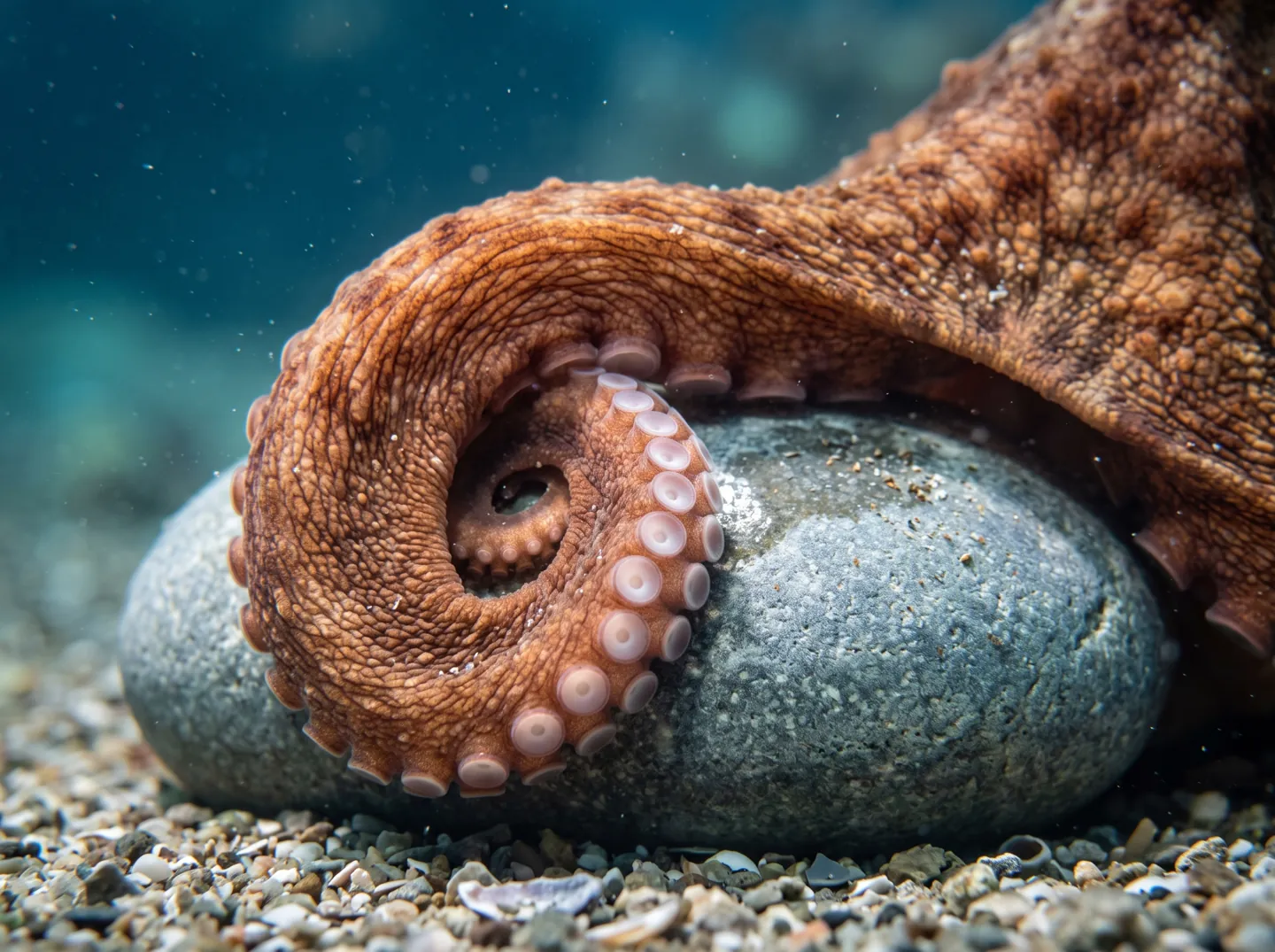
Each octopus arm carries over 200 suckers that can feel, taste and smell, according to an OIST researcher.
FOUR THINGS OCTOPUSES HAVE SHOWN
These come from experiments and field observations, not anecdotes. Each shows a different side of how an octopus solves problems.
In an OIST study, five of six octopuses learned which side of an opaque Y-shaped maze held food, using an arm they could not see.
Veined octopuses collected coconut shell halves, stacked them and walked them across the seafloor for later use as a lair.
Researchers describe octopuses opening jars, solving puzzles and even escaping from their tanks.
A Harvard report notes octopuses often gather debris such as broken glass and tiles and place it in front of their dens.
A SEPARATE EXPERIMENT IN MINDS
Dolphins, chimpanzees, elephants and clever birds are all vertebrates, relatively close relatives of ours. Octopuses are invertebrates, and our last common ancestor lived 500 to 600 million years ago.
That means octopus intelligence probably evolved entirely separately from ours, which is why researchers study it to ask which features of a mind are universal and which are unique to us.
Questions
Not quite. Some scientists have described them that way, but a 2020 OIST study found information flows between the arms and the central brain, and the researcher behind it described one brain and eight very clever arms.
Over 500 million, similar to a dog, according to OIST. More than two thirds are in the arms and body.
Yes. The Animal Welfare (Sentience) Act 2022 defines animal to include any vertebrate other than humans, any cephalopod mollusc and any decapod crustacean.
The government said in 2021 that existing industry practices would not be affected. The law also provides for an Animal Sentience Committee to report on how well government policy takes account of animal welfare.
A 2009 study described veined octopuses carrying stacked coconut shell halves up to 20 metres and using them later as shelter, which the researchers counted as tool use.
ABOUT THIS NAME
doodlesmarts.com is part of the DoodleSale portfolio. It isn't in an auction right now, but you can ask about leasing it.